Critical Infrastructure Solutions
Cold Aisle & Hot Aisle
Containment Systems
Intelligent airflow management for efficient, resilient and scalable data centres.
Engineered for Efficiency. Designed for Resilience. Built for Growth.
Improve cooling efficiency. Increase rack density. Maximise infrastructure capacity.
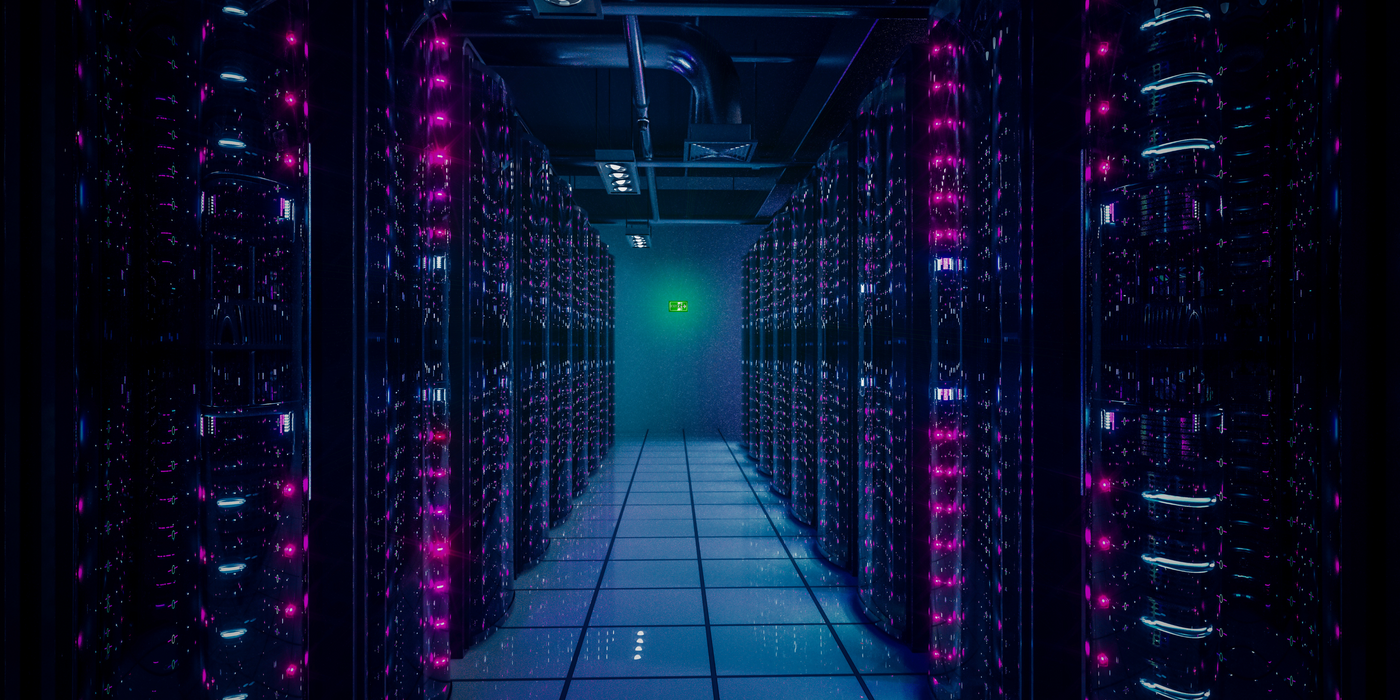
Cold Aisle and Hot Aisle Containment systems are engineered solutions designed to optimise airflow management within data centres, computer rooms and mission-critical IT environments.
By physically separating conditioned supply air from heated server exhaust air, containment minimises unnecessary air mixing, improves cooling predictability and enables existing cooling infrastructure to operate more efficiently.
Whether designing a new data centre or upgrading an existing operational facility, Treske provides a comprehensive approach to containment design, supply, installation and commissioning. Our solutions are developed to improve thermal performance, reduce unnecessary cooling energy consumption, maximise existing infrastructure investment and support long-term IT capacity growth.
Understanding Cold Aisle & Hot Aisle Containment
Cold Aisle Containment (CAC)
Encloses the conditioned supply-air corridor between opposing rows of server racks, ensuring cool air reaches equipment air intakes. Physical separation reduces mixing with hot exhaust air and creates more stable inlet temperatures.
- Consistent conditioned air at server inlets
- Reduced hot-air recirculation and hot spots
- Improved inlet temperature stability
- Compatible with appropriately designed raised-floor or overhead supply
- Suitable for new installations and retrofit projects
Hot Aisle Containment (HAC)
Encloses the heated exhaust-air corridor behind server racks, capturing warm air and directing it to the cooling return path. Separation can improve return-air conditions and overall heat-removal effectiveness.
- Captures and isolates server exhaust air
- Reduces recirculation into adjacent rack inlets
- Supports improved cooling return-air conditions
- Suitable for higher-density environments
- Enables predictable thermal management
Key Features & Benefits
Improved Thermal Management
Reduces hot/cold air mixing, temperature fluctuations and localised hot spots.
Reduced Cooling Energy
Creates opportunities to optimise cooling setpoints, fan speeds and unnecessary mechanical demand.
Increased Rack Density
Supports higher IT heat loads where electrical, cooling and airflow capacity permit.
Optimised Cooling Assets
Improves utilisation of CRAC, CRAH and in-row cooling infrastructure by reducing bypass airflow.
Improved Reliability
Helps maintain more consistent server inlet temperatures and reduce thermal stress.
Reduced Operating Costs
Potentially lowers cooling energy and unnecessary equipment operation through effective controls.
Modular & Scalable
Adaptable configurations support rack additions and future infrastructure changes.
Environmental Visibility
Integrates with temperature, humidity, pressure, BMS and DCIM monitoring solutions.
Sustainability Outcomes
Can support improved facility energy efficiency and PUE when savings are measured and validated.
Benefits are site-specific; energy and capacity improvements must be verified against actual conditions and controls.
Typical Containment System Components
| Component | Function & Benefit |
|---|---|
| Containment roof panels | Fixed, removable or fire-system-compatible panels separating supply and return airflow. |
| Aisle access doors | Sliding, hinged or automatic doors that limit leakage while preserving access. |
| Rack infill panels | Close gaps between racks of different dimensions and heights. |
| Rack blanking panels | Prevent air bypass through unused rack spaces. |
| End-of-row partitions | Complete separation at aisle boundaries. |
| Airflow sealing accessories | Brush strips, cable seals, floor grommets and under-rack barriers. |
| Structural support systems | Appropriate supports and fixing methods for containment structures. |
| Environmental monitoring | Temperature, humidity and differential pressure sensing. |
| Fire and safety integration | Coordination with sprinklers, detection, suppression and emergency egress. |
Solutions can be configured around existing rack infrastructure or supplied as part of a complete new rack and cooling solution.
Initial Site Assessment & Online Containment Comparison
Discover the right containment strategy before committing to detailed engineering.
As the first step in any Greenfield or Brownfield containment project, Treske utilises its Online Containment Comparison System to undertake an initial assessment of the proposed data centre environment.
This interactive assessment enables customers to evaluate the suitability of Cold Aisle versus Hot Aisle Containment by considering rack configuration, IT heat loads, existing or proposed cooling systems, airflow distribution and operational requirements. It highlights comparative benefits, design considerations and potential cooling-efficiency opportunities.
The results establish a foundation for detailed engineering, helping Treske develop a tailored solution that balances thermal performance, energy efficiency, implementation complexity and future scalability.
Initial Assessment Inputs
Infrastructure & Cooling
- Greenfield or Brownfield environment
- Rack count, dimensions, orientation and aisle layout
- IT load in kW per rack and total facility load
- CRAC, CRAH, in-row, DX or chilled-water cooling
- Raised-floor, overhead or room-based airflow
Operations & Growth
- Known hot spots and rack inlet temperatures
- Cooling redundancy and maintenance requirements
- Equipment accessibility and business continuity
- Future rack additions and higher-density loads
- Monitoring and cooling-control capabilities
Compare Cold Aisle vs Hot Aisle Containment
Explore the benefits and suitability of each strategy for your environment. Start with an online comparison, then progress to a site-specific engineering assessment.
Conduct Online Comparison Now →The assessment is preliminary; final recommendations require site inspection and engineering validation. Replace this button with the verified comparison-system URL before publishing.
Greenfield Projects
New rooms — racks not yet installedGreenfield projects allow containment to be integrated into the initial data centre design before racks are installed.
Rack arrangements, cooling, electrical distribution and airflow management can be designed as a coordinated solution, minimising retrofit compromises and providing a scalable foundation for growth.
- Initial Planning & Capacity AssessmentConfirm rack quantities and dimensions, initial and future kW loads, rack density, equipment airflow, cooling redundancy, floor space and expansion plans.
- Containment Strategy & DesignUse the online comparison and project requirements to evaluate CAC versus HAC. Define rack orientation, aisle widths, service clearances, roof panels, doors, supports and future rack positions.
- Cooling & Building Services CoordinationCoordinate CRAC/CRAH/in-row cooling, airflow paths, supply and return temperatures, power, cabling, lighting, ceiling services, fire systems and BMS integration.
- Installation & IntegrationSequence containment with rack and room construction to reduce rework, ensure access and support efficient deployment.
- Testing & CommissioningInspect seals and doors, verify airflow, measure rack inlet temperatures, check cooling operation and validate monitoring.
Brownfield Projects
Existing rooms — operational racksBrownfield projects retrofit containment around existing server racks, frequently within live, mission-critical environments.
The solution must accommodate existing equipment, cooling, overhead services and physical constraints while preserving operational continuity and equipment access.
- Detailed Site SurveyRecord rack locations and dimensions, height variations, aisle widths, ceiling obstructions, cabling, cooling units, fire protection, access and structural constraints.
- Thermal & Airflow AssessmentMeasure inlet/exhaust temperatures, IT loads, hot spots, cooling supply/return temperatures, bypass airflow, recirculation and available cooling capacity.
- Feasibility & Retrofit EngineeringDesign infill panels, adjustable roof structures, access doors, height transitions, floor and cable seals, and independent support where required.
- Operational Risk & Installation PlanningPlan work around live IT, cooling continuity, access, overhead activities, fire-system interfaces, staging, maintenance windows and potential shutdowns.
- Staged Containment InstallationInstall components progressively, preserving cooling and access. Introduce temporary airflow controls where necessary.
- Post-Installation Testing & OptimisationCompare temperatures against the baseline, verify separation, resolve leaks, review cooling performance and optimise setpoints where supported.
Key Engineering & Design Considerations
| Consideration | Technical Assessment |
|---|---|
| Rack configuration | Quantities, dimensions, alignment, orientation and expansion |
| IT heat load | Current and future kW per rack, aisle and facility |
| Cooling architecture | CRAC, CRAH, in-row, DX or chilled water |
| Airflow distribution | Raised-floor, overhead or room-based supply and return |
| Environmental conditions | Rack inlet temperatures, humidity and relevant ASHRAE guidance |
| Cooling redundancy | N, N+1 or other required availability strategy |
| Structural integration | Fixings, roof supports, clearances and rack suitability |
| Fire and life safety | Sprinklers, smoke detection, suppression, egress and applicable codes |
| Monitoring and controls | Temperature, BMS, DCIM and cooling-system integration |
| Maintenance access | Rack doors, service clearances and safe equipment access |
| Operational continuity | Staging, risk controls, temporary airflow and commissioning |
All designs require validation against applicable building, electrical, mechanical and fire-safety requirements.
Testing, Commissioning & Performance Validation
Containment should be commissioned against measurable thermal and airflow objectives, not simply inspected as a physical enclosure.
Containment Integrity
Inspect panels, doors, seals and interfaces to identify and correct leakage paths.
Thermal Performance
Measure rack inlet temperatures and cooling supply/return temperatures to assess consistency.
Airflow Assessment
Review supply distribution, bypass, recirculation and significant pressure imbalances.
Cooling System Review
Assess operating conditions and identify opportunities to optimise setpoints and fan operation.
Monitoring Validation
Verify temperature, humidity and pressure instrumentation where included in scope.
Baseline & Reporting
Establish Greenfield baseline performance or compare Brownfield pre/post-installation conditions.
Ongoing Optimisation
Maximum benefit is achieved when containment is combined with appropriate cooling controls and monitoring. Post-commissioning opportunities may include changes to supply temperatures, fan speeds, airflow distribution and cooling-unit sequencing. Energy savings and capacity improvements should be validated through measured performance.
Greenfield vs Brownfield at a Glance
| Project Element | Greenfield | Brownfield |
|---|---|---|
| Rack infrastructure | New racks not yet installed | Existing installed racks |
| Primary objective | Integrated containment design | Retrofit and cooling optimisation |
| Initial assessment | Proposed loads and infrastructure | Existing conditions and survey |
| Containment selection | Greater design flexibility | Compatibility with existing layout |
| Cooling assessment | Proposed capacity and airflow | Current performance and capacity |
| Structural design | Coordinated with new rack layout | Adapted to existing constraints |
| Installation | Coordinated with construction | Staged around live operations |
| Operational disruption | Typically minimal before IT deployment | Requires controlled risk management |
| Performance baseline | Established at commissioning | Pre/post-installation comparison |
| Future expansion | Planned into initial layout | Subject to available space and capacity |
Integrated Critical Infrastructure Expertise
Treske combines specialist expertise in critical power, racks, precision cooling, environmental monitoring and infrastructure maintenance to deliver containment solutions that work as part of the complete data centre environment.
Assessment & Design
Online containment comparison, Greenfield planning, Brownfield surveys, cooling compatibility reviews and rack/aisle engineering.
Delivery & Optimisation
Modular or custom containment, project coordination, installation, thermal commissioning, DCIM/BMS integration and ongoing optimisation.
By evaluating containment alongside cooling capacity, IT heat load, airflow distribution, electrical infrastructure and operational requirements, Treske helps customers make informed investment decisions and develop practical, scalable solutions.
Start Your Containment Project with Treske
Compare. Assess. Design. Implement. Optimise.
Whether planning a new data centre or improving an existing facility, selecting the right containment strategy is a key step towards efficient and reliable cooling. Treske's Online Containment Comparison System provides a practical starting point, followed by detailed site surveys, engineering design, infrastructure coordination, installation and commissioning.
Discover the Right Containment Strategy for Your Data Centre
Request access to the Online Containment Comparison System and take the first step towards improved cooling efficiency and infrastructure resilience.
Conduct ROI Assessment Now →The button opens Treske's contact page. Replace it with the direct comparison-system URL once confirmed.
Technical note: Containment suitability, energy savings, cooling capacity improvements and implementation requirements are site-specific. All designs are subject to engineering validation, applicable standards, fire and life safety requirements and final approved scope.