

Table of Contents
- Understanding Critical Infrastructure Maintenance in Healthcare
- Establishing Maintenance Standards for Critical Areas
- SOCI Act Compliance for Hospitals
- Implementing Predictive Maintenance Strategies for Healthcare
- Selecting Vendor-Agnostic Infrastructure Solutions
- Managing Operational Continuity During Maintenance and Upgrades
- Building a Long-Term Maintenance Programme and Budget
- Frequently Asked Questions
Last Updated: October 1, 2026
Understanding Critical Infrastructure Maintenance in Healthcare
Critical infrastructure maintenance for hospitals is the systematic approach to preserving, monitoring, and upgrading the essential systems that keep clinical operations running without interruption. Power, cooling, and data systems form the backbone of modern healthcare delivery. When these fail, patient care stops. This isn't theoretical risk, it's operational reality that demands precision planning and execution.
Treske Pty Limited works with healthcare facilities across Australia and New Zealand to build resilience into their critical infrastructure. The challenge isn't just keeping systems running; it's upgrading them without disrupting the 24/7 clinical environment. Most hospitals struggle with this tension. They need better infrastructure but can't afford downtime. The solution lies in understanding what maintenance actually involves and how to structure it strategically.
Healthcare facilities operate under constraints that other industries don't face. A data centre in a bank can schedule downtime. A hospital data centre cannot. Patient monitors, diagnostic equipment, and electronic health records depend on continuous power and cooling. This reality shapes every maintenance decision you make.
Establishing Maintenance Standards for Critical Areas
Maintenance standards define what "acceptable performance" looks like for your critical systems. Without clear standards, maintenance becomes reactive firefighting instead of strategic planning. You're responding to failures rather than preventing them.
Start by mapping your critical areas. In hospitals, these include the data centre, operating theatres, intensive care units, and diagnostic imaging suites. Each area has different tolerance for disruption. An operating theatre cannot lose power mid-procedure. A diagnostic imaging suite has slightly more flexibility but still operates under strict constraints.
For each critical area, establish three performance metrics: uptime targets, environmental thresholds, and response times. Uptime targets typically range from 99.5% to 99.99% depending on the area's criticality. Environmental thresholds specify acceptable temperature and humidity ranges, most data centres operate optimally between 18-27°C with 30-55% relative humidity. Response times define how quickly your team must act when something deviates from standard.
Documentation matters here. Create a maintenance standards document that your entire team understands. Include specific equipment serial numbers, location details, and the maintenance schedule for each system. When standards are clear and documented, compliance becomes measurable and auditable.
SOCI Act Compliance for Hospitals
The Security of Critical Infrastructure Act 2018 (SOCI Act) establishes the framework for protecting critical infrastructure in Australia. Hospitals managing critical infrastructure must understand their obligations under this legislation. The SOCI Act requires operators of critical infrastructure to report security incidents and maintain resilience standards.
For healthcare facilities, SOCI Act compliance means documenting your critical infrastructure, identifying vulnerabilities, and implementing controls to manage security risks. This extends beyond traditional cybersecurity to include physical infrastructure resilience. Your power and cooling systems are part of your critical infrastructure footprint.
Compliance requires you to establish and maintain security plans that address both cyber and physical threats. You must conduct regular risk assessments, implement protective measures, and report significant incidents to the relevant authorities. The legislation emphasises resilience, your ability to maintain operations even when systems are under stress or attack.
Documentation is central to SOCI Act compliance. You need records showing how your maintenance programme addresses security requirements, how you've assessed infrastructure vulnerabilities, and what controls you've implemented. This isn't bureaucratic overhead, it's evidence that you're managing your critical infrastructure responsibly.
Engage with the Department of Home Affairs SOCI Act guidance to understand your specific obligations. Compliance requirements vary based on your facility's size, location, and the systems you operate. A 500-bed teaching hospital has different obligations than a 50-bed regional facility.
Implementing Predictive Maintenance Strategies for Healthcare
Predictive maintenance strategies shift your approach from reactive repairs to proactive system management. Instead of waiting for equipment to fail, you monitor performance indicators and address issues before they become critical failures.
Real-time monitoring forms the foundation of predictive maintenance. Deploy sensors on your power and cooling equipment that continuously measure performance parameters, voltage stability, temperature trends, humidity levels, and system load. This data feeds into monitoring software that flags deviations before they become failures.

The benefit is substantial: predictive maintenance typically extends equipment lifespan, reduces emergency repairs, and improves uptime. More importantly for hospitals, it eliminates the surprise failures that force emergency shutdowns during critical patient care.
Treske Preventative Maintenance Contract →
Implement a tiered alerting system. Minor deviations trigger notifications for your operations team to investigate during routine checks. Significant deviations trigger immediate alerts requiring urgent response. Critical deviations initiate automated failover procedures. This structure ensures your team addresses issues proportionally without creating alert fatigue.
Consider software solutions like Eaton's Intelligent Power Manager for real-time infrastructure monitoring or APC's EcoStruxure IT platform for predictive analytics, which provide real-time visibility into power and environmental systems. These platforms integrate with your existing infrastructure to create a unified monitoring environment. Treske Pty Limited can assist with implementing these systems and integrating them into a facility's operational framework.
Data analysis is the next layer. Collect performance data over time and identify patterns. Temperature drift that occurs gradually might indicate cooling system degradation. Voltage fluctuations might suggest power distribution issues. Humidity trends might reveal environmental control problems. These patterns, detected early, allow planned maintenance rather than emergency repairs.
Selecting Vendor-Agnostic Infrastructure Solutions
Healthcare facilities often inherit infrastructure from multiple vendors, power systems from one manufacturer, cooling from another, monitoring from a third. This creates complexity: different interfaces, incompatible spare parts, and vendor lock-in that limits your flexibility.
Vendor-agnostic solutions allow you to select the best technology regardless of manufacturer. This approach protects your facility from being dependent on a single vendor's pricing, support, or product roadmap. When you can mix and match components, you maintain control over your infrastructure decisions.
Evaluate solutions based on technical capability, not brand loyalty. Ask potential vendors whether their systems work with equipment from other manufacturers. Can their monitoring software integrate with third-party equipment? Do their power systems work with cooling units from different suppliers? These questions reveal whether they're genuinely agnostic or just claiming to be.

Documentation and interoperability standards matter here. Look for solutions that support industry-standard protocols like SNMP for monitoring, Modbus for device communication, and standard electrical interfaces. When systems speak standard languages, you can integrate them regardless of manufacturer.
Treske Pty Limited maintains a vendor-agnostic approach to critical infrastructure design. We specify power, cooling, and monitoring solutions based on your facility's requirements, not on vendor relationships. This means you get infrastructure tailored to your needs rather than infrastructure tailored to vendor margins.
Vendor lock-in isn't just expensive, it's risky for healthcare facilities. When you're locked into a single vendor, you lose negotiating power on pricing and support. More critically, you become dependent on that vendor's product roadmap. If they discontinue a product line or shift their support priorities, you're vulnerable.
Managing Operational Continuity During Maintenance and Upgrades
The core challenge in healthcare infrastructure maintenance is performing necessary upgrades without disrupting patient care. This requires planning that most other industries never consider. You can't simply shut down your data centre for maintenance, you need strategies that maintain operations while work proceeds.
Building a Long-Term Maintenance Programme and Budget
Effective maintenance programmes extend beyond individual repairs or upgrades. They require strategic planning that accounts for equipment lifecycle, infrastructure ageing, and evolving clinical needs.
| Maintenance Component | Purpose | Frequency |
|---|---|---|
| Preventative Inspections | Identify issues before failure | Monthly/Quarterly |
| Environmental Monitoring | Track temperature and humidity | Continuous |
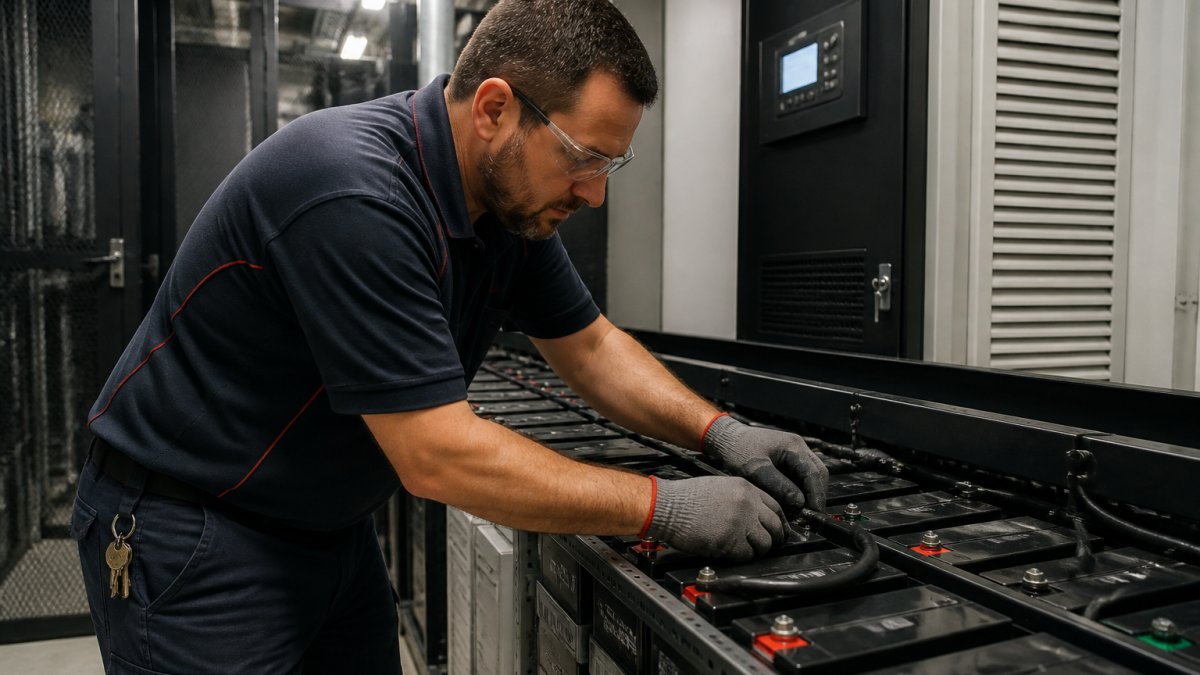
| Battery Testing | Verify UPS capacity | Annually |
| Load Bank Testing | Confirm generator performance | Annually |
| Thermal Imaging | Detect cooling inefficiencies | Semi-annually |
| System Documentation | Maintain compliance records | Ongoing |
Frequently Asked Questions
What is considered critical infrastructure in healthcare under the SOCI Act?
Under the Security of Critical Infrastructure (SOCI) Act, critical infrastructure in healthcare includes systems essential to continuous clinical care: power distribution, uninterruptible power supplies (UPS), cooling systems, medical gas delivery, data centre infrastructure, and communication networks. These systems must be protected against physical and cyber threats. Healthcare facilities must implement security plans that address risk assessment, access controls, and incident response. Compliance requires documented maintenance schedules, regular audits, and staff training. Facilities should conduct annual reviews of their critical infrastructure security posture and update plans based on emerging threats and regulatory changes.
How does predictive maintenance improve hospital facility resilience?
Predictive maintenance strategies for healthcare use real-time monitoring and IoT sensors to detect equipment degradation before failure occurs. By analysing temperature, vibration, and performance data, facilities identify issues early, schedule maintenance during planned downtime, and avoid emergency repairs that disrupt clinical care. This approach extends asset lifecycle and lowers maintenance costs. Hospitals can prioritise repairs based on risk to patient safety, allocate resources more efficiently, and maintain better documentation for compliance reporting. Integrated monitoring platforms provide dashboards showing system health, enabling proactive decision-making across multiple facilities.
What are the main challenges in maintaining hospital critical infrastructure?
Hospital facility managers face several maintenance challenges: 24/7 operational demands mean any downtime affects patient care; ageing infrastructure often mixes legacy and modern systems requiring different expertise; budget constraints limit preventative investment; staff turnover creates knowledge gaps; and regulatory compliance adds complexity. Healthcare facilities must balance maintenance costs against clinical priorities, coordinate work across multiple departments, and manage vendor relationships. Many hospitals struggle with documentation of maintenance history, making it difficult to predict failures or justify upgrades. Additionally, integrating new monitoring systems with existing equipment from different manufacturers requires technical expertise and careful planning.
Why should hospitals choose vendor-agnostic infrastructure solutions?
Vendor-agnostic infrastructure solutions protect hospitals from lock-in, allowing facilities to select the most effective equipment for their needs rather than being forced into proprietary ecosystems. This approach reduces costs by enabling competitive procurement, simplifies maintenance by allowing staff to work across multiple brands, and provides flexibility for future upgrades without replacing working systems. Hospitals can mix and match components from different manufacturers, negotiate better service terms, and avoid dependency on a single vendor for critical support. Agnostic solutions also improve resilience by reducing single points of failure and enabling easier transitions when vendors discontinue products or services.