


Table of Contents
- What Drives Data Centre Rack Installation Costs
- Hardware vs Labour: Where the Money Goes
- Data Centre Cabling Installation Costs Explained
- Server Rack Installation Best Practices That Cut Costs
- Managing Legacy Data Centre Equipment Compatibility
- Hidden Fees and Ongoing Operational Costs
- Frequently Asked Questions
Last Updated: September 15, 2026
What Drives Data Centre Rack Installation Costs
Budgeting for a data centre rack installation cost guide starts with one uncomfortable truth: the rack itself is rarely the expensive part. Installation labour, power distribution, cooling capacity and compliance work usually account for the majority of the final invoice.
Data centre rack installation cost is the total expense of positioning, securing, powering, cabling and commissioning IT equipment inside a rack enclosure, covering hardware, labour, electrical work and ongoing operational overhead.

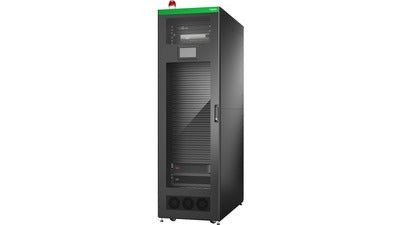
Power density, cooling and floor loading
Power density is the single biggest variable in any quote. A standard rack might draw a few kilowatts; a high-density cabinet running blade servers can draw far more, and every extra kilowatt demands more cooling, heavier cabling and often a dedicated power distribution unit. Floor loading matters just as much. Older facilities were never engineered for the concentrated weight of a fully populated 42U cabinet, so structural assessment or reinforcement can appear as a line item. HVAC requirements follow power density directly: more heat per square metre means more airflow management, and hot aisle containment or cold aisle containment retrofits add cost but reduce long-term energy spend.
Tier classification and uptime targets
Tier classification determines redundancy, and redundancy determines price. A Tier II facility with partial redundancy costs far less to fit out than a Tier IV design with fault-tolerant power paths. Uptime targets drive duplication of UPS systems, dual-corded equipment and standby generators. If your service level agreement promises near-continuous availability, expect the installation budget to reflect it.
Hardware vs Labour: Where the Money Goes
Splitting a quote into capital expenditure and operational expenditure is the fastest way to see where costs actually sit. Hardware covers the rack enclosure, PDUs, cable management, containment and monitoring. Labour covers installation, electrical work, commissioning and testing.
| Cost Category | Typical Share | What It Covers |
|---|---|---|
| Rack enclosure and accessories | 15-25% | Cabinet, shelves, blanking panels, cable trays |
| Power distribution | 15-20% | PDUs, UPS connection, electrical fit-out |
| Installation labour | 25-35% | Rack and stack, cabling, mounting, labelling |
| Commissioning and testing | 10-15% | Site acceptance testing, load verification |
| Contingency | 5-10% | Legacy compatibility, structural work |
Those shares are a starting point, not a quote. The reason two identical rack builds can land thousands of dollars apart is that labour is priced by the hour against a rate card, and the rate card moves with the market, the shift and the licence required to do the work.
What actually moves the labour line
Licensing and competency. Electrical connection work, running circuits to a PDU, terminating into a UPS distribution board, or installing a new sub-board, must be carried out by a licensed electrician under state and territory electrical safety legislation. In practice this means the electrical portion of a rack fit-out is quoted separately from the rack-and-stack portion, and the two rarely move in step. A rack-and-stack crew can be scaled with casual labour; a licensed electrician cannot.
Shift and access. Standard hours attract standard rates. Work inside a live hall, after hours, or in a secure zone with escort requirements typically attracts penalty rates, and most facilities restrict noisy or dusty work to defined windows. A build that would take two days in an empty hall can take four nights in a live one, at a higher hourly rate.
Award coverage. Installation technicians are commonly engaged under the Electrical, Electronic and Communications Contracting Award or a closely related instrument, which sets minimum rates, overtime loadings and allowances (Electrical, Electronic and Communications Contracting Award 2020 (MA000025)). Contractors quoting below award minimums are a red flag, not a bargain, the shortfall usually reappears as a variation.
Supervision and documentation. Larger builds carry a project supervisor, a safety officer for high-risk work, and a documentation deliverable (as-built drawings, labelling registers, test results). These are labour hours, not hardware, and they are frequently omitted from initial estimates.
A worked example
Take a single 42U cabinet, populated with 20 rack units of equipment, installed in an existing colocation hall:
- Rack enclosure, shelves, blanking panels and cable management: the smallest line.
- Two metered PDUs plus connection to existing power: a mid-range line, dominated by the electrician's time.
- Rack-and-stack labour for 20 rack units: the largest single line, scaling with unit count and cable volume.
- Structured cabling, copper and fibre runs, patch panels, labelling, testing: often comparable to the rack-and-stack line once fibre is involved.
- Commissioning and site acceptance testing: a fixed-scope line that should never be cut.
Scale that to a 20-cabinet deployment and the pattern holds: hardware scales roughly linearly, labour scales with complexity. Cabling a 20-cabinet row is not 20 times the cost of cabling one cabinet, because the spine and aggregation layers are shared, but the per-cabinet termination and testing work is not.
Where the two categories blur
Some items sit on the boundary. Containment, hot aisle or cold aisle panels, is hardware, but installing it is labour, and retrofitting containment into a live hall is almost entirely labour. Monitoring sensors are hardware; commissioning them into an existing DCIM platform is labour and often requires vendor involvement. When comparing quotes, check whether containment installation and monitoring commissioning are inside the labour line or excluded entirely.
Labour is where quotes diverge most. A common mistake is comparing only equipment prices and assuming installation hours will be similar. They rarely are. Access restrictions, out-of-hours work in a live facility and the sheer volume of cabling infrastructure all push labour upward.
Data Centre Cabling Installation Costs Explained
Cabling is the most underestimated line in the budget. Copper and fibre runs, patch panels, cable management and testing all scale with rack count and distance, not with the price of the servers.
Structured cabling must be planned before racks are populated. Retrofitting cable runs after equipment is live means working around production systems, usually at night, at premium rates. Cross-connect charges apply where you connect into a shared meet-me-room or carrier environment, and those are typically billed monthly rather than once.
Network latency targets also influence cabling design. Longer runs and additional patching points add resistance and complexity, so a design that keeps runs short reduces both installation labour and future fault-finding time.
Server Rack Installation Best Practices That Cut Costs
Following server rack installation best practices reduces both the initial invoice and the ongoing maintenance bill. The biggest savings come from planning the physical layout before any hardware arrives on site.
- Survey the floor for load capacity, cable routes and cooling airflow before ordering anything.
- Confirm power density per cabinet and match PDU capacity to it, not to the average.
- Standardise on one rack unit height and depth across the estate to simplify spares.
- Label every cable, port and rack unit during installation, never afterwards.
- Commission with a formal site acceptance testing process before handover.
- Photograph the completed build for future maintenance reference.
Blanking panels are cheap and frequently skipped.
Managing Legacy Data Centre Equipment Compatibility
The three compatibility traps
Migration sequencing that contains cost
Hidden fees that appear during legacy migrations
Total cost of ownership over the migration horizon
Hidden Fees and Ongoing Operational Costs
Watch for these:
Frequently Asked Questions
What factors influence the total cost of rack installation?
The main cost drivers are rack enclosure hardware, installation labour, cabling infrastructure, power distribution units and cooling modifications. High-density configurations using blade servers need more power density and cooling capacity, which raises both capital and operational expenditure. Floor loading limits, fire suppression upgrades and whether you run a standard 42U cabinet or a high-density rack all affect the final figure. Site access, after-hours work windows and the condition of existing containment also shift labour costs significantly.
What is the difference between rack hardware costs and professional installation fees?
Hardware costs cover the rack enclosure itself, PDUs, cable management trays, blanking panels and containment components. Professional installation fees cover the labour to assemble, level and secure the rack, run and terminate cabling, commission power and cooling, and test redundancy. A 42U enclosed cabinet might cost several thousand dollars on its own, while labour can add 30 to 50 percent on top depending on site complexity. Bundling design, supply and installation with one provider usually reduces total cost.
How does legacy equipment compatibility affect installation project costs?
Managing legacy data centre equipment compatibility often adds cost because older servers may not fit standard rail kits, draw uneven power loads or require custom cable management. Mixed generations of hardware can force additional PDUs, adaptor brackets or dedicated cooling zones. These extras are rarely in the original quote. Auditing every legacy unit before installation, confirming rack unit heights and power draw, and planning cable runs around existing infrastructure prevents surprise charges and keeps the project on budget.
What are the ongoing operational costs associated with rack enclosures?
Ongoing costs include power consumption for servers and cooling, preventative maintenance, monitoring subscriptions and periodic cable management reviews. Energy is typically the largest operational expenditure, and inefficient hot aisle containment or undersized HVAC requirements push it higher. A structured preventative maintenance schedule extends equipment life and avoids emergency call-out fees. Budgeting 10 to 15 percent of the original installation cost annually for maintenance and efficiency tuning is a practical starting point.