

Table of Contents
- Why Sustainable Cooling Is Now a Business Imperative
- Liquid Cooling vs Air Cooling Efficiency: What the Data Shows
- Data Centre PUE Optimisation: Metrics That Drive Real Change
- Modular Cooling for Small Server Rooms and Edge Sites
- Retrofitting Legacy Data Centers: A Practical Path Forward
- Managing Water Usage and Heat Recovery Opportunities
- Choosing the Right Sustainable Cooling Partner
- Frequently Asked Questions
Last Updated: September 7, 2026
Why Sustainable Cooling Is Now a Business Imperative
A sustainable cooling system for data centers is no longer an environmental afterthought; it is a core operational and financial strategy. Cooling can account for up to 40% of a facility's total energy consumption, making thermal management the single largest lever for reducing both carbon footprint and operational expenditure. At Treske Pty Limited, we design and install critical infrastructure across Australia and New Zealand.

The urgency comes from climbing energy prices and tightening regulatory scrutiny. Below, we show you how to evaluate your options and choose a partner who can deliver measurable results without disrupting 24/7 operations.
Liquid Cooling vs Air Cooling Efficiency: What the Data Shows
The debate between liquid cooling and air cooling efficiency is settled for high-density racks: liquid wins on raw heat transfer. Water and dielectric fluids carry heat far more effectively than air, allowing liquid cooling to manage thermal loads above 30 kW per rack that traditional air-cooled chillers cannot handle. For standard-density environments, modern air cooling with variable frequency drives remains a highly efficient baseline.
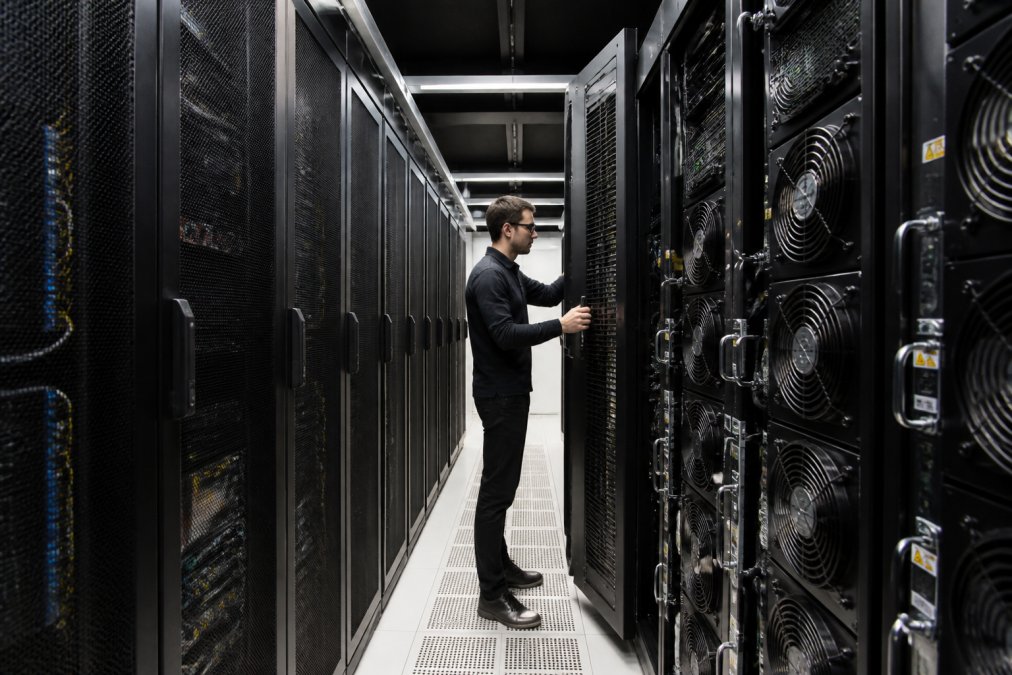
The choice depends on your power density. Air-based systems, such as in-row cooling units placed between racks, shorten the path of heat dissipation. Liquid cooling, including direct-to-chip and rear-door heat exchangers, excels where GPUs and high-performance computing create concentrated heat. A hybrid architecture offers the flexibility many operators need as they scale.

Data Centre PUE Optimisation: Metrics That Drive Real Change
Data centre PUE optimisation is the most direct way to measure progress, but only if you track it correctly. Power Usage Effectiveness (PUE) is the ratio of total facility energy to IT equipment energy; a perfect score is 1.0, and many legacy sites run between 1.5 and 2.0.
Improving PUE requires attacking the biggest losses first. Raising chilled water supply temperatures, implementing variable speed drives on fans and pumps, and using economisation to draw in ambient air during cooler months are proven methods. The guidance from the Australian Energy Regulator on demand management highlights the network-level benefits of reducing peak load, which aligns with smarter cooling control. Every 0.1 reduction in PUE on a 1 MW facility can represent substantial annual kilowatt-hour savings, directly cutting energy bills.
A common mistake is chasing a low PUE number while ignoring water consumption. A system that uses excessive evaporative cooling may post an excellent PUE but a poor Water Usage Effectiveness (WUE). Sustainable cooling balances both metrics.
Modular Cooling for Small Server Rooms and Edge Sites
For edge computing and small server rooms, modular cooling for small server rooms offers a scalable path to efficiency without the complexity of central plant. These self-contained units provide targeted cooling capacity where it is needed, particularly in facilities without a dedicated chiller plant or where raised floor space is limited.
The APC by Schneider Electric InRow Airflow Cooling System, available through Treske, is a strong example. It delivers 30 kW of cooling in a 300 mm wide footprint, making it suitable for high-density zones within a mixed environment. Its scroll compressor and integrated network management allow precise control, supporting overall PUE improvement.
Retrofitting Legacy Data Centers: A Practical Path Forward
Retrofitting legacy data centers is often more complex than building new, but it is a critical strategy for reducing industry-wide carbon footprint. Most existing facilities were designed for 5-10 kW per rack and now struggle with higher densities, within the constraints of a live environment where downtime is unacceptable.
Step 1: The Thermal Audit and Baseline
The first step is a comprehensive thermal audit, not a cursory walkthrough. This involves:
- CFD (Computational Fluid Dynamics) modelling of the existing airflow patterns to identify recirculation zones and hotspots. Many legacy facilities have underfloor obstructions, cables, pipes, and debris, that disrupt the intended airflow path.
- Real-time temperature mapping at the rack inlet and outlet, not just at the room level. A room-level sensor might read 22°C while the top of a rack is drawing in 30°C air recirculating from the hot aisle.
- Identifying airflow short-circuits, where cold supply air bypasses the IT equipment entirely. Common culprits include missing blanking panels, unsealed cable penetrations, and perforated tiles placed in front of empty rack space.
Step 2: Low-Cost Containment and Airflow Management
Before adding any mechanical cooling capacity, fix the airflow. The order of operations matters:
- Seal all cable gaps and floor penetrations with fire-rated brush grommets. This is a low-cost, high-impact fix that prevents cold air from escaping into the plenum or hot air from bypassing the return grilles.
- Install blanking panels in every unused rack U-space. A single missing panel can disrupt the pressure differential that drives air through the servers.
- Implement hot aisle containment (HAC) or cold aisle containment (CAC). HAC is generally preferred for retrofits because it is easier to seal the hot aisle ceiling and return the hot air directly to the cooling unit. CAC requires more careful management of the cold supply pressure to avoid over-pressurisation.
- Adjust perforated tile placement to match actual rack heat loads. Remove tiles in front of low-density racks and add them where hotspots are identified.
These measures typically allow existing CRAC units to operate at higher supply temperatures, often from 18°C to 22-24°C, directly improving chiller efficiency by 2-3% per degree Celsius of supply air temperature increase.
Step 3: Targeted Supplemental Cooling for High-Density Zones
Once airflow is optimised, assess which racks still exceed the capacity of the room-level system. For racks in the 15-30 kW range, targeted in-row cooling units are the most practical retrofit solution. These units sit between racks, capture hot exhaust air directly, and return cool air to the rack inlet, creating a short, closed loop independent of the room's airflow balance.
Installation can be staged row by row. Each in-row unit is pre-commissioned and tested at the factory, then installed during a scheduled maintenance window. The unit connects to the existing chilled water loop or, if self-contained, requires only power and network connections.
Step 4: Mechanical Plant Upgrades and Controls
If the audit reveals that the central plant itself is undersized or inefficient, consider targeted upgrades rather than full replacement:
- Variable frequency drives (VFDs) on existing fans and pumps can reduce part-load energy consumption by 30-50%. Most legacy CRAC units run at constant speed, wasting energy whenever the load is below peak.
- Magnetic bearing chillers offer a drop-in replacement for older screw or centrifugal compressors. They eliminate oil-related maintenance, operate efficiently at part load, and can be installed with minimal disruption to the existing chilled water loop.
- Upgrading the control system to a modern building management system (BMS) with predictive algorithms can optimise setpoints based on real-time IT load and external weather conditions, rather than relying on fixed schedules.
The Cost-Benefit Reality
A well-executed retrofit, containment, airflow sealing, and targeted in-row cooling, can reduce cooling energy consumption by 20-35% for a capital investment of $150,000 to $400,000 for a typical 500 kW facility. This compares favourably to a full mechanical overhaul, which can exceed $1 million and require extended downtime. The payback period is typically 18-36 months.
Managing Water Usage and Heat Recovery Opportunities
Water is a finite resource, and its use in cooling is a growing regulatory and reputational concern. Water Usage Effectiveness (WUE), measured in litres of water consumed per kilowatt-hour of IT energy, fills the gap left by PUE. A facility with a PUE of 1.2 relying on evaporative cooling towers might consume 1.5 to 2.0 litres per kWh, while an air-cooled chiller plant with a slightly higher PUE of 1.35 might consume zero water. The sustainable choice is the lowest combined environmental burden.
The Water-Energy Trade-off: A Decision Framework
The choice between water-intensive and energy-intensive cooling depends on three variables: local water stress, the carbon intensity of the grid, and the ambient climate.
- Water-stressed regions: In areas where water is scarce or drought-prone, air-cooled chillers or dry coolers are the responsible choice, even if they consume 10-15% more electricity than an evaporative system. The water restrictions and management frameworks provide a clear picture of regional availability, and operators should assess their site against these conditions before specifying a cooling plant.
- Carbon-intensive grids: Where electricity is generated from high-emission sources, the energy savings from evaporative cooling may justify the water use, provided the water is sourced from a non-potable supply such as treated effluent or harvested rainwater.
- Temperate climates: In regions with low wet-bulb temperatures, adiabatic systems offer a middle path. They operate in dry mode for most of the year and switch to evaporative assist only during peak heat events, limiting water consumption to a few hundred hours annually.
Heat Recovery: Moving from Waste to Revenue
Waste heat recovery is often discussed in aspirational terms, but the economics are becoming concrete. A 1 MW IT load typically rejects 900-950 kW of heat. Capturing even a fraction of that for space heating or hot water can offset natural gas consumption in adjacent buildings. The most practical applications are:
- District heating schemes: Data centers located near urban heating networks can sell low-grade heat at 40-60°C. This requires a heat pump to raise the temperature, but the coefficient of performance (COP) of modern heat pumps makes this viable when the heat demand is consistent year-round.
- Greenhouse and aquaculture operations: Facilities in rural or peri-urban areas can supply warm water to commercial greenhouses or fish farms, creating a local circular economy. These operations typically require 25-35°C water, which can be extracted directly from the cooling loop without additional energy input.
- Absorption chillers: In hybrid architectures, recovered heat can drive absorption chillers that provide supplemental cooling, effectively using waste heat to reduce the electrical load on the primary compressors.
Regulatory Drivers and Reporting Obligations
The climate-related financial disclosure requirements now mandate that large Australian businesses report on climate risks and emissions, including scope 2 emissions from purchased electricity. Water usage, while not always a direct reporting requirement, is increasingly scrutinised by investors and insurers as a physical climate risk. Facilities that can demonstrate a balanced approach to WUE and PUE, backed by documented water metering and heat recovery initiatives, are better positioned for both compliance and stakeholder confidence.
A practical approach is to set internal targets for both metrics. For example, a facility might commit to a PUE below 1.3 and a WUE below 0.5 L/kWh, using air-cooled chillers as the baseline and adding evaporative assist only during extreme heat events.
Choosing the Right Sustainable Cooling Partner
Selecting a partner for sustainable cooling requires more than comparing equipment prices. The right provider should offer an agnostic approach, recommending the best technology for your specific thermal load, rather than pushing a single vendor's product line. Treske Pty Limited designs, supplies, and installs power, cooling, and rack systems from leading manufacturers.
A credible partner will also demonstrate a clear project path: site assessment, thermal modelling, a detailed installation plan that minimises disruption, and a commissioning process that verifies performance against design targets. Ongoing maintenance and optimisation are equally critical.
Ask potential providers about their support model. Will they be available in five years to service the equipment they install? Do they offer remote monitoring and adjustment to keep the system running at peak efficiency? The standards for data centre facilities and infrastructure provide a framework for reliability and energy management that a professional partner should be able to navigate with ease.
| Cooling Strategy | Best For | Key Efficiency Driver | Primary Trade-off |
|---|---|---|---|
| Air-based (In-Row) | Standard density, retrofits | Short airflow path, high return temps | Limited capacity above 30 kW/rack |
| Liquid Cooling | High-density racks, HPC | Superior heat transfer | Higher capital cost, water or coolant loop |
| Hybrid Architecture | Mixed environments | Flexibility for variable loads | Added system complexity |
| Modular/Edge Units | Small rooms, edge sites | Scalability, no central plant | Per-unit cost can be higher |
Sustainable cooling is a balancing act between energy, water, and capital expenditure. The path forward requires a clear-eyed assessment of your current infrastructure, a willingness to adopt new metrics like WUE alongside PUE, and a partner who can execute a phased plan without compromising uptime. At Treske Pty Limited, our technology-agnostic design and installation services help you achieve tangible efficiency gains while building long-term resilience. Visit our site today to explore how our range of in-row cooling and critical infrastructure solutions can support your next project.
Frequently Asked Questions
What is the most energy-efficient cooling method for data centres?
The most efficient approach depends on your density and climate. For high-density racks, liquid cooling offers superior heat transfer and can dramatically reduce energy use compared to air. For many facilities, optimising air-based systems with in-row cooling and free cooling during cooler months delivers the best balance. A hybrid strategy often achieves the lowest PUE. A professional thermal assessment is the first step to identifying which method suits your specific layout and load.
How does liquid cooling compare to traditional air cooling for sustainability?
Liquid cooling is generally more sustainable for high-density environments because water and dielectric fluids transfer heat far more effectively than air. This reduces the energy consumed by fans and compressors, lowering both PUE and carbon footprint. However, it introduces water usage, so evaluating Water Usage Effectiveness (WUE) is critical. Air cooling remains viable for lower densities, particularly when combined with efficient in-row units and variable speed drives.
How can modular cooling systems improve sustainability in small server rooms?
Modular cooling, such as in-row units, delivers targeted cooling exactly where it is needed, avoiding the energy waste of cooling an entire room uniformly. In a small server room, this prevents hot spots and allows for higher equipment density without oversized central plant. These systems scale incrementally, meaning you only run the cooling capacity you need at any given time, which directly improves energy efficiency and reduces operational costs.
What role does AI play in optimising data centre cooling efficiency?
AI-driven thermal management software continuously analyses sensor data across the facility to adjust cooling output in real time. It identifies inefficiencies, predicts thermal loads, and optimises set points far faster than manual control. This approach can reduce cooling energy consumption by 20-30% by ensuring systems run at peak efficiency. It also supports PUE optimisation by correlating IT workload with cooling demand, an increasingly important strategy for meeting sustainability targets.