


Table of Contents
- What Enterprise Power Infrastructure Design Services Actually Deliver
- Critical Power System Redundancy Strategies That Survive Real Failures
- AS/NZS 3000 Electrical Installation Standards in Practice
- How to Migrate Away From Vendor Lock-In Without Ripping Everything Out
- Cost-Benefit Analysis: What Infrastructure Upgrades Actually Return
- Cybersecurity and Sustainability in Modern Power System Design
- Commissioning, Field Testing and Ongoing Asset Maintenance
- Frequently Asked Questions
Last Updated: September 19, 2026
What Enterprise Power Infrastructure Design Services Actually Deliver
Enterprise power infrastructure design services take a critical facility from a load schedule to a commissioned, maintainable power system. We see the same pattern across data centres, hospitals and utility sites: the design either anticipates failure modes or it doesn't.
The scope usually spans four things:
- Load and capacity modelling across normal, peak and transient conditions
- Single-line diagrams, protection coordination and earthing systems that meet the applicable standard
- Equipment selection and layout for UPS, switchboards, PDUs and cooling
- Commissioning, field testing and asset documentation handed over as an operating record
Critical Power System Redundancy Strategies That Survive Real Failures
The architectures that hold up in practice:

-
N+1 modular UPS where a single power module can be removed while the load runs. The Centiel 3-Phase Modular UPS is built for exactly this, with hot-swappable modules and redundant fans.
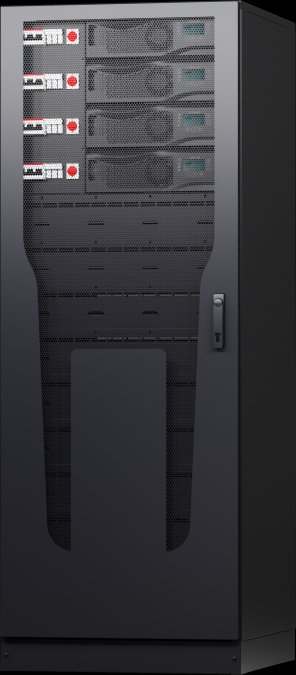
- 2N distribution with fully independent A and B paths from the utility entrance to the rack PDU. No shared breakers, no shared busway.
- Maintenance bypass on every UPS so the unit can be isolated without dropping the load. The CyberPower Maintenance Bypass Switch does this at the rack level.
The test is simple: walk the path from incoming supply to load and count how many components a single fault could take out. More than one per path means the design needs work.
AS/NZS 3000 Electrical Installation Standards in Practice
AS/NZS 3000, the Wiring Rules, is the baseline every installation must satisfy, governing conductor sizing, protection, earthing and verification. It is the standard your electrical contractor, insurer and regulator all work from.
- AS/NZS 3000, the installation itself: sizing, protection, earthing, verification
- AS/NZS 3008.1.1, cable selection and current-carrying capacity, which drives conductor sizing under real installation conditions
- AS/NZS 3010, electrical installations on construction and demolition sites, relevant during the build phase
- AS/NZS 3012, electrical installations on construction and demolition sites for the period of the works
- AS/NZS 61439, low-voltage switchgear and controlgear assemblies, which governs the switchboards your design specifies
- AS 2067, switchgear and controlgear assemblies above 1 kV, where the design reaches into high-voltage territory
- AS/NZS 1768, lightning protection, which matters for exposed sites and overhead connections
- AS 2374, power transformers, where the design includes a dedicated transformer
- State and territory service and installation rules, the connection requirements your distributor enforces at the point of supply
- Earthing systems sized for fault current, not habit, with equipotential bonding across the UPS and switchboard, and earth grid design that accounts for soil resistivity at the site rather than a default value
- Protection coordination so a downstream fault trips the nearest device, not the main incomer, with discrimination studies documented rather than assumed
- Segregation and labelling that lets a technician isolate a circuit safely at 3am, including arc flash labelling where the incident energy warrants it
- Cable derating for grouping, ambient temperature and installation method, which is where optimistic single-line diagrams meet reality
The connection point is a separate approval
Satisfying AS/NZS 3000 does not give you the right to connect. The connection is governed by the distributor's service and installation rules, and for larger loads may be contestable, you can choose who builds the connection assets, but the distributor still approves the design and protection settings.
- Load and generation modelling to establish the maximum demand and any embedded generation or storage
- Connection application to the distributor, with the proposed protection and metering arrangements
- Design approval against the distributor's service rules and, where relevant, the National Electricity Rules
- Construction of connection assets, either by the distributor or a contestable provider
- Commissioning and energisation, witnessed or approved by the distributor
Where the regulators sit
For the specific clauses and current amendments, work from the Standards Australia catalogue entry for AS/NZS 3000 rather than a secondhand summary. For connection requirements, work from your distributor's published service and installation rules, they are the document your design will actually be assessed against.
How to Migrate Away From Vendor Lock-In Without Ripping Everything Out
- Document what you actually own. Make, model, firmware, and the interfaces each device exposes. SNMP and Modbus support is the difference between a device you can monitor and one you can't.
- Standardise the management layer first. A platform like EcoStruxure IT or Sunbird Datacenter Management can monitor equipment from multiple manufacturers, which breaks the monitoring monopoly before you touch a single UPS.
- Replace on failure, not on principle. When a unit reaches end of life, specify an open-protocol replacement. The Galaxy VS UPS, for example, is SNMP-manageable and supports remote monitoring through a network management card.
An agnostic approach to technology makes this work: if your design partner specifies equipment they can service regardless of brand, the lock-in weakens with every replacement cycle.

Cost-Benefit Analysis: What Infrastructure Upgrades Actually Return
Returns come from four places, and only one is the equipment. Efficiency gains from modern UPS topology and modular cooling are real and compound over the asset's life, but the larger returns usually come from avoided downtime, deferred capital and reduced maintenance labour. The gap in most business cases is the arithmetic, not the concept.
- Energy cost from operating efficiency, measured against your actual load profile rather than a nameplate figure. Pull 12 months of interval data from your electricity retailer or metering provider, then model the delta between the existing topology and the proposed one at your real average and peak loads.
- Avoided downtime valued at your real cost per hour of outage. That figure should include lost transactions or production, staff idle time, SLA credits, and the recovery labour to bring systems back. Most facilities understate this because they only count the obvious revenue line.
- Deferred capex where modular capacity lets you buy power as you need it rather than all at once. Model the avoided cost of capital on the capacity you don't install in year one.
- Maintenance cost from reduced mean time to repair on hot-swappable components, plus the avoided cost of planned outages that no longer require a shutdown.
Upgrade |
Primary Return |
Typical Trigger |
|---|---|---|
Modular UPS replacement |
Efficiency + MTTR reduction |
End-of-life units, rising service costs |
Maintenance bypass installation |
Avoided planned outages |
UPS servicing requires shutdown |
Monitoring platform deployment |
Fault prevention + capacity planning |
Blind spots in power and cooling |
Earthing and protection review |
Compliance + fault containment |
Audit findings, insurance requirements |
Building the numbers without kidding yourself
A defensible business case rests on four inputs you control: metered consumption, contracted energy tariff, downtime cost per hour, and discount rate. Everything else is an assumption you should be able to defend line by line.
Where the returns are weakest
Be sceptical of cases built on efficiency alone. A UPS at 97% efficiency uses less energy than an older unit at the same load, but the absolute saving depends on how loaded the unit actually is. A lightly loaded UPS, common where facilities over-provisioned at build, may show a smaller delta than the brochure suggests, because part-load efficiency curves are not flat.
The cost side people forget
The upgrade cost is not just the equipment. Include design and documentation, switchroom modifications, cabling and busway changes, commissioning and load bank testing, and the disruption cost of any planned cutover outage. On older sites the switchroom itself may need work first, earthing upgrades, protection coordination changes, and clearance or ventilation improvements often surface during detailed design rather than at quoting.
What to ask before signing
- What load profile and tariff assumptions underpin the quoted savings?
- Is the downtime cost figure yours or an industry average?
- Does the payback include the cutover outage and switchroom remediation?
- What happens to the case if energy prices fall or your load grows faster than modelled?
A word of caution on payback periods: any figure you're quoted should be built from your metered consumption and your own downtime cost, not an industry average. Ask to see the assumptions, and ask what would have to be true for the project to fail to clear your hurdle rate. A vendor who can answer is selling engineering; one who can't is selling a number.
Cybersecurity and Sustainability in Modern Power System Design
Two forces are reshaping power design, and most facilities still treat them as afterthoughts. Cybersecurity matters because a UPS with a network management card is a networked device, and networked devices get targeted. Sustainability matters because efficiency is now a procurement criterion, not a nice-to-have.
- Segment management networks from corporate IT
- Disable unused protocols and change default credentials on every management card
- Keep firmware current and log access to power infrastructure
Commissioning, Field Testing and Ongoing Asset Maintenance
A proper commissioning scope covers:
- Site acceptance testing against the design intent, not just a power-on check
- Functional testing of bypass, transfer and isolation sequences
- Load bank testing where the design requires it
- Documentation of tested results, settings and as-built configuration
After handover, the asset enters its maintenance life. Preventative maintenance on a defined schedule, battery health monitoring, and periodic review of protection settings keep the system honest. The Safe Work Australia guidance on electrical safety sets the framework for how that work is carried out safely on site.
Frequently Asked Questions
What are the key components of enterprise power infrastructure design?
A complete design covers high voltage and low voltage distribution, substation design, UPS systems such as the Galaxy VS 100kW or Eaton 93PM modular range, earthing systems, protection coordination, SCADA and EMS integration, and load flow analysis. It also addresses power quality, network integration and the physical infrastructure lifecycle, from project procurement through to commissioning and asset maintenance. Each element must align with AS/NZS 3000 and the local network operator's connection requirements so the system performs as designed when the load is live.
How do you ensure redundancy in critical power infrastructure?
Redundancy starts with topology. N+1 configurations duplicate critical components so a single failure does not interrupt supply. Modular UPS platforms let you add power modules and battery strings without redesigning the room. Dual feeds from separate substations, automatic transfer switches and maintenance bypass panels keep loads energised during servicing. Protection coordination and load flow analysis confirm the system behaves correctly under fault conditions. Regular field testing and preventative maintenance then verify that the redundancy you designed still works months or years after commissioning.
What standards must power infrastructure design meet in Australia?
AS/NZS 3000 sets the wiring rules for electrical installations. High voltage work also falls under state-based safety regulations and the network operator's connection standards. Designs need to satisfy those requirements alongside AS/NZS 3010 for electrical installations on construction sites and relevant ENA guidelines for contestable connection work. Compliance is not optional paperwork; it determines whether the installation can be energised and signed off.
Why is vendor-agnostic design critical for enterprise power systems?
Vendor-agnostic design keeps your options open. When a specification names one manufacturer's equipment throughout, every future upgrade, spare part and service contract is tied to that supplier. An agnostic approach evaluates UPS platforms, cooling systems and rack enclosures on their technical fit for your load profile, not on a partnership agreement. That means you can mix a Galaxy VS UPS with an Eaton 93PM in different zones, source maintenance bypass switches from whichever brand suits the site, and avoid being locked into a single pricing structure for the life of the facility.