

Last Updated: November 18, 2026
Quick Summary
To monitor hospital critical power infrastructure remotely, cover every layer from utility supply to final critical circuit: generators, transfer switches, UPS units, critical boards and power quality. Then define alarm thresholds, escalation playbooks and cybersecurity controls, and validate the whole system with simulated faults before go-live.
- Monitor utility supply, generators, transfer switches, UPS units, critical boards and power quality, not just the UPS.
- Record a fortnight of normal operation on each critical board before setting alarm thresholds.
- Pair each alarm threshold with a written playbook naming who is called and in what order.
- Place monitoring equipment on a segmented network and use named accounts rather than shared logins.
- Run a data quality check a fortnight after go-live to catch duplicate devices and stale readings.
Table of Contents
- Why Remote Monitoring of Hospital Critical Power Infrastructure Matters
- What a Hospital Power Monitoring System Should Cover
- Step-by-Step: Implementing Remote Monitoring of UPS Systems
- Hospital Generator Monitoring and Routine Testing
- Power Quality Monitoring in Hospitals: Voltage, Current and Harmonics
- Alert Thresholds, Escalation and Response Playbooks
- Cybersecurity, Access Governance and Compliance Documentation
- Commissioning and Validating Your Hospital Power Monitoring System
- Frequently Asked Questions
Why Remote Monitoring of Hospital Critical Power Infrastructure Matters
Remote monitoring of hospital critical power infrastructure is the practice of tracking the health, load and alarm status of UPS units, generators, transfer switches and distribution boards from a central location rather than through physical rounds. Across healthcare sites, the equipment is often reliable, but visibility is not.
That gap matters because clinical areas cannot absorb a silent failure. A tripped critical board or a UPS running on depleted batteries is only dangerous when nobody knows about it. Remote monitoring turns a reactive scramble into an early warning.
A common mistake is treating monitoring as an IT project bolted onto the electrical system. For a practical walk-through of the maintenance regime that sits behind the monitoring, see our guide to critical infrastructure maintenance for hospitals.
What a Hospital Power Monitoring System Should Cover
A hospital power monitoring system should cover every layer between the utility supply and the final critical circuit, not just the UPS. Monitoring that covers only the UPS leaves the largest risks unobserved.
The essential coverage list looks like this:
- Utility incoming supply and main switchboard status
- Standby generator readiness, fuel and run status
- Automatic transfer switch position and transfer events
- UPS input, output, battery and bypass status
- Critical boards and life-safety circuits
- Power quality at the point of use
Critical Boards, Transfer Switches and Life-Safety Circuits
Critical boards feed the loads that cannot wait: operating room suites, intensive care, emergency departments, pathology refrigeration and fire systems. Monitoring these boards means watching breaker status, load per phase and any earth leakage or trip events.
Transfer switches deserve the same attention. An automatic transfer switch that fails to transfer is invisible until the moment it is needed. Log every transfer event, including tests, and alert on any transfer that does not complete within the expected window.
Monitoring Architecture and Interoperability
The architecture question is simple to state and easy to get wrong: does the data land in one place, or five?
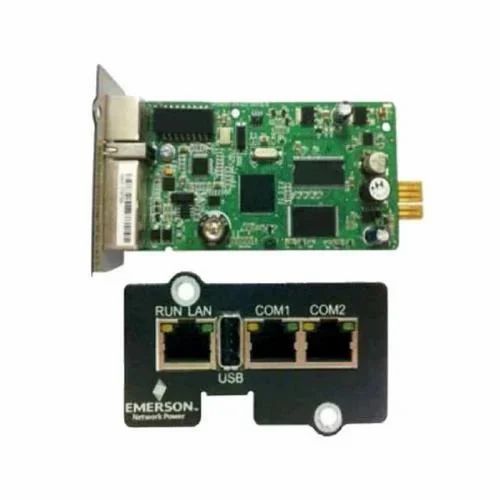
Interoperability is where vendor-neutral advice earns its keep. Devices speak SNMP, Modbus or dry contacts, and older equipment often needs a gateway to join the conversation. A network monitoring interface such as the Vertiv RDU-SIC G2 gives supported critical infrastructure equipment a route into centralised monitoring, DCIM, NMS or BMS environments without locking the site into one manufacturer.
Step-by-Step: Implementing Remote Monitoring of UPS Systems
Implementing remote monitoring of UPS systems follows a repeatable sequence. The steps below reflect how we approach it on live hospital sites where shutdown windows are short and disruption must be minimal.
- Inventory the assets. Record make, model, age, firmware, communication card and location for every UPS. This becomes your asset register.
- Confirm communication capability. Check whether each UPS has a network card or serial port. Units without one need a card fitted during a planned window.
- Assign network addresses and access. Put monitoring traffic on a dedicated VLAN with documented firewall rules.
- Configure the monitoring platform. Set polling intervals, device credentials and data retention.
- Define alarm thresholds. Agree the values that trigger an alert before you enable notifications.
- Test end to end. Pull a comms cable, simulate a battery fault and confirm the alert reaches the right person.
- Document and hand over. Record configuration, credentials ownership and escalation paths.
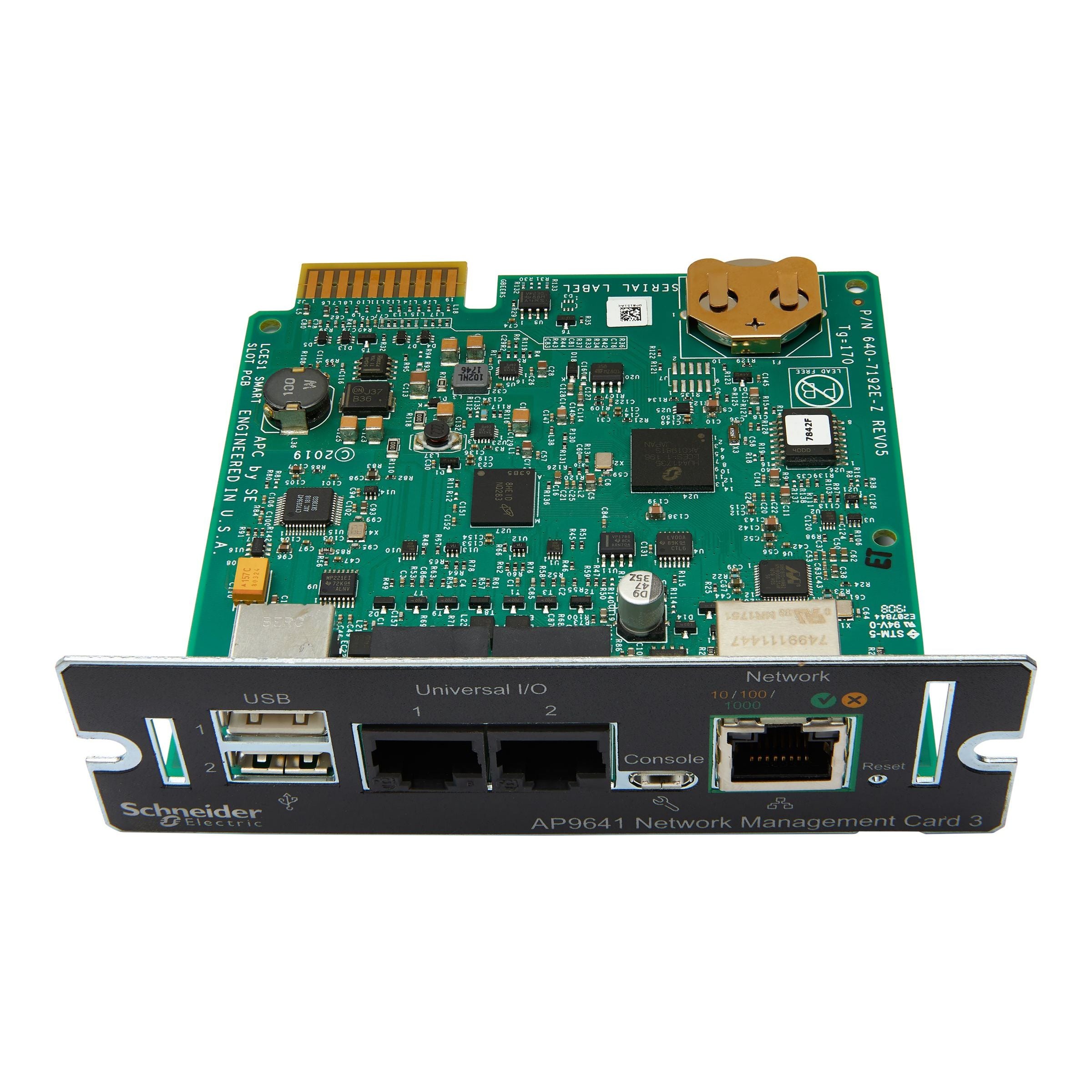
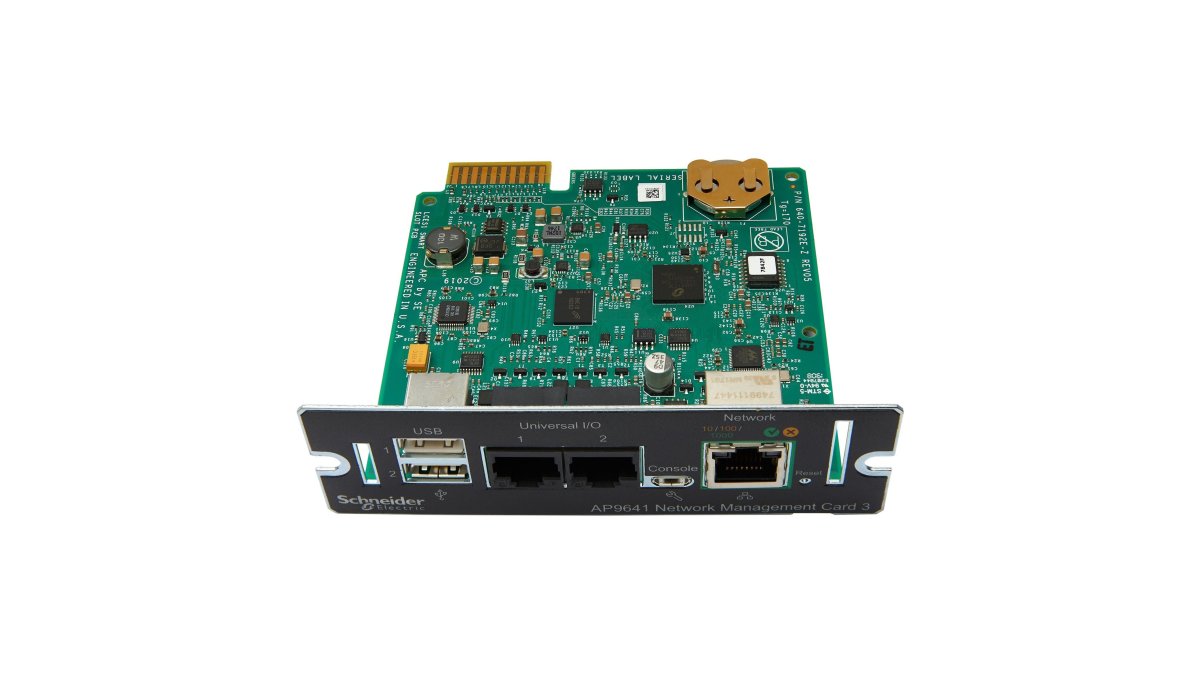
A network management card such as the APC by Schneider Electric AP9641 provides remote management, shutdown coordination and environmental monitoring in one unit, which simplifies step two considerably.
Battery Condition, Load and Bypass Status
Battery condition is the metric most often ignored and most often the cause of a UPS failing under load. Monitor battery voltage, internal resistance where supported, runtime estimate and the date of the last successful test.
Load percentage per phase shows whether a UPS is running near capacity or badly balanced. Bypass status tells you whether the protected load is currently riding on raw utility power, which is the single most important alarm on the platform.
Hospital Generator Monitoring and Routine Testing
Hospital generator monitoring confirms that standby plant will start and carry load when called upon, rather than assuming it will. The monitoring layer should capture start attempts, run hours, fuel level, coolant temperature, oil pressure and any failure-to-start alarm.
Routine testing remains essential alongside the data. A generator that reports "ready" but has never carried load in months is a paper promise. Schedule load bank testing at agreed intervals and log the results against the monitored figures. Our article on UPS load bank testing and battery testing explains the methods in detail.
Watch out: monitoring a generator without ever testing it under load creates false confidence. The dashboard shows green, the plant has not been proven, and the gap only surfaces during an outage.
Power Quality Monitoring in Hospitals: Voltage, Current and Harmonics
Power quality monitoring in hospitals can track voltage, current, active power, power factor, harmonics and load imbalance at the boards that matter.
Start with the measurements that change behaviour:
- Voltage deviation. Log sustained over- and under-voltage against the nominal supply. A board running persistently high or low is a sign of tap settings, supply impedance or load distribution that needs review.
- Current per phase and load imbalance. Compare phase currents on each board. A sustained imbalance increases neutral current and heating, and it is one of the earliest indicators that load has been added without rebalancing.
- Power factor. A falling power factor on a board serving motors or imaging equipment points to reactive load growth and possible correction needs.
- Harmonics and neutral current. Log total harmonic distortion and neutral current on boards serving imaging suites, variable-speed drives and large UPS systems; those are the loads most likely to reveal a problem first.
- Transients and sags. Where the meter supports it, capture short-duration events, because a sag that resets a controller rarely shows up in averaged trends.
Set a baseline before you set alarms. Record a fortnight of normal operation on each critical board, then define thresholds as a deviation from that baseline rather than a generic number.
Prioritise sub-metering by consequence.
Link the data to maintenance. A rising neutral current on an imaging board should trigger a review of load balance, not just an alarm acknowledgement.
Watch out: power quality meters that are installed but never baselined produce alarming-looking charts that nobody trusts, and the monitoring programme loses credibility before it has proven its value.
Alert Thresholds, Escalation and Response Playbooks
Alert thresholds convert raw data into action, and they only work when they are deliberate. A platform that emails everything to everyone gets ignored within a fortnight.
Build the threshold set around consequence, not sensitivity:
| Event | Threshold example | First responder | Response window |
|---|---|---|---|
| UPS on battery | Any occurrence | On-call electrician | Immediate |
| UPS bypass active | Any occurrence | Facility manager | Immediate |
| Battery failing test | One failed test | Maintenance planner | Same day |
| Generator fail to start | Any occurrence | Mechanical contractor | Immediate |
| Board load imbalance | Sustained deviation | Electrical contractor | Next business day |
| Comms loss to device | Missed poll cycle | Monitoring administrator | Same day |
Pair each threshold with a written playbook: who is called, in what order, what they check first and when the escalation moves to the next tier. Zone-based monitoring helps here, because an alarm from an operating room board should not follow the same path as one from an administration wing.
Cybersecurity, Access Governance and Compliance Documentation
Monitoring adds network-connected devices to a clinical environment, so security is part of the design, not an afterthought. Place monitoring equipment on a segmented network, restrict inbound access, change default credentials and log every configuration change against a named user.
Access governance means named accounts rather than shared logins, reviewed periodically, with read-only access as the default for anyone who does not need control. Document the architecture, the firewall rules, the alarm matrix and the test records. That documentation supports electrical safety obligations, accreditation reviews and any incident investigation.
At Treske Pty Limited, our team works across healthcare, emergency services, education and pathology environments. We remain agnostic about which platform a site runs, because the right answer depends on the existing estate.
Commissioning and Validating Your Hospital Power Monitoring System
Commissioning proves the system does what the design promised. A monitoring platform that has never had a simulated fault pushed through it is untested, regardless of how many devices report as online.
Work through validation in this order:
- Confirm every asset in the register appears in the platform
- Verify each reading against a physical or handheld measurement
- Simulate a comms failure on each network segment
- Trigger each alarm class and confirm delivery to the correct responder
- Test escalation timing against the playbook
- Record data retention and confirm historical trends populate
- Hand over credentials, configuration records and the alarm matrix
Commissioning should also include a data quality check a fortnight after go-live. Our data centre power commissioning process guide sets out the sequence we follow, and the same discipline applies to hospital plant. Where a site prefers to hand the whole validation over, our Site Acceptance Testing service covers exactly that step, and ongoing Preventative Maintenance keeps the monitored plant and its test records current long after go-live.
Hospitals run on the assumption that the power will be there. Remote monitoring is how you make that assumption defensible rather than hopeful, and the difference shows up in the first real event. Treske Pty Limited designs, supplies and supports critical infrastructure with an agnostic approach, backed by in-house field technicians and over 50 service locations from metro centres to regional communities.
Frequently Asked Questions
What hospital power systems should be monitored remotely?
Start with the assets that keep life-safety and clinical services running: the emergency power supply system, standby generators, uninterruptible power supply units and their batteries, automatic transfer switches, critical boards and operating room circuits. Add power quality data such as voltage, current, harmonics and load imbalance at the board level. Environmental sensors for temperature and humidity in plant rooms and comms rooms are worth including, because heat and water damage cause outages that power monitoring alone will not catch.
How does remote monitoring help prevent hospital outages?
Remote monitoring turns a reactive repair cycle into fault detection before failure. A UPS battery trending toward end of life, a generator that fails its routine test, or a circuit approaching load imbalance all show up in trend data long before they cause an outage. Alarm notification then reaches maintenance personnel while there is still time to act. The value depends on setting alarm thresholds that match each asset and having an escalation path so alerts are acted on, not just logged.
What cybersecurity measures are needed for remote monitoring of hospital power systems?
Treat the monitoring network as a separate, governed zone. Use role-based access so only authorised staff can view or control assets, enforce multi-factor authentication, and log every session. Keep monitoring traffic on a segmented VLAN or dedicated path rather than the clinical network, and patch firmware on network cards and gateways on a schedule. Document who has access and review it regularly, because a monitoring platform is only as secure as its weakest account.
How do hospitals maintain power monitoring during a network outage?
Design for local resilience first. Network management cards and gateways should buffer alarm and event data locally so nothing is lost while the link is down, then forward it once connectivity returns. Keep a local alarm panel or BMS view so on-site staff still see system status. For critical sites, use redundant communications paths, such as a secondary cellular link, and test failover as part of routine testing rather than assuming it works.
