


Table of Contents
- Server Rack Blanking Panel Review and Benefits: What They Are
- Why Unused Rack Space Costs You Money
- Server Rack Airflow Management and Bypass Air
- 1U and 2U Blanking Panels: Choosing the Right Size
- Brush Blanking Panels vs Solid Panels
- Blanking Panel Installation and Maintenance
- When Blanking Panels Are Not the Answer
- Frequently Asked Questions
Last Updated: October 15, 2026
Server Rack Blanking Panel Review and Benefits: What They Are
A server rack blanking panel is a simple cover that fills unused rack units in a server cabinet, sealing gaps that would otherwise let air escape. This guide from Treske Pty Limited examines what blanking panels do, how they improve server rack airflow management, and where they fall short.

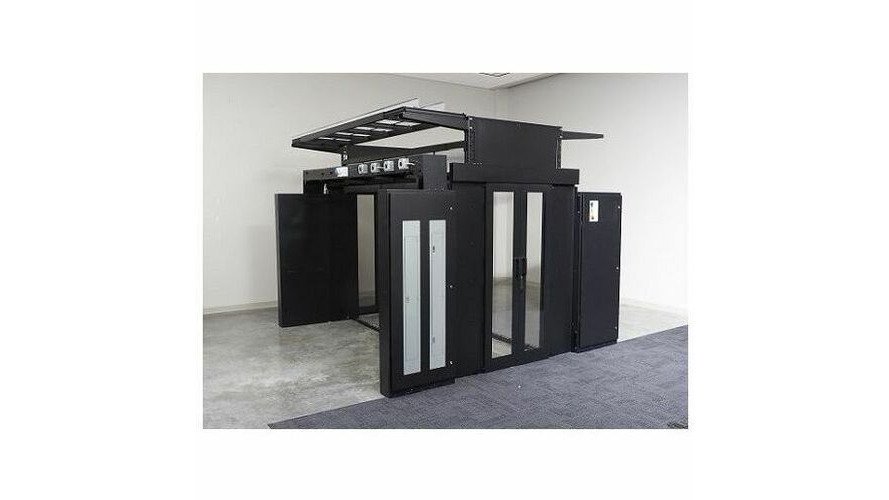
Every standard rack has empty U-space. Cold air from the aisle finds those gaps and escapes to the return path before it ever cools a server. A blanking panel closes that gap.
Most guides treat blanking panels as an afterthought. According to guidance on data centre airflow management from industry experts, sealing unused rack space is a foundational step before more expensive containment work begins.
The benefits are straightforward: better airflow separation, fewer hotspots, less dust ingress, and cooling systems that do not have to work as hard to hold setpoint temperatures.
Why Unused Rack Space Costs You Money
Open rack slots are small but add up. A rack with ten empty 1U positions has ten paths for conditioned air to bypass equipment entirely.
That wasted air is air you already paid to cool.
A common mistake is assuming a few open slots do not matter. In a densely populated rack, they do.
Blanking panels reduce that leakage and address a genuine source of wasted cooling capacity.

Server Rack Airflow Management and Bypass Air
Server rack airflow management controls how cold air moves through a cabinet so it cools equipment rather than escaping. Bypass air is the portion of cold supply air that avoids servers entirely and returns to the cooling unit still cold. The goal is separation: cold air in the front, hot air out the back, with minimal mixing. Blanking panels support that separation by closing the gaps that let air short-circuit.
Hot-Air Recirculation and Hotspots
Hot-air recirculation happens when exhaust air from the rear of a rack is drawn back into the cold aisle and into server intakes. This raises intake temperatures and creates hotspots, localised areas where equipment runs hotter than the rest of the rack. Blanking panels reduce recirculation by removing the openings that allow hot and cold air to mix. According to ASHRAE guidance on data centre thermal guidelines, maintaining intake temperatures within recommended ranges is central to reliable equipment performance.
How to Measure the Effect Before and After
Most articles claim blanking panels improve cooling efficiency without showing how to verify it. You can measure the effect with a simple before-and-after method.
- Baseline the rack. Record intake temperatures at the top, middle, and bottom of the front face using a handheld probe or the rack's own sensors. Note the supply air temperature from the nearest perforated tile or grille.
- Record the gap. Count the open U-space in the rack and note where it sits, top, middle, or interspersed.
- Fit the panels. Cover the open U-space with correctly sized panels, ensuring each sits flush.
- Re-measure under the same conditions. Take the same readings at the same load and supply air temperature. A common pattern is a narrower spread between hottest and coolest intake readings, and a lower peak intake temperature at the top of the rack.
- Check the return air. If you can read return air temperature, a rise after fitting panels indicates less cold bypass air is reaching the return path, which is the intended outcome.
The exact numbers depend on rack load, density, supply air temperature, and how much open space existed. A rack with ten open 1U slots will show a larger change than one with two. The point is not a fixed percentage, it is to confirm the panels are doing what you paid for and to give you a defensible before-and-after record for the next capacity review.
What Panels Do Not Fix
Blanking panels fix one problem: open rack space. They do not fix a poorly designed room. If your cold and hot aisles are not separated, or your cooling capacity is genuinely undersized, panels help at the margins but not the underlying issue.
They also will not help if your racks are fully populated, no open U-space means nothing to cover, or correct equipment mounted the wrong way round, or a rack drawing air from the wrong side.
The honest position: blanking panels are a low-cost, high-value first step in airflow management. According to the Uptime Institute's research on data centre outages, thermal issues remain a recurring cause of downtime, which is why airflow fundamentals deserve attention before anything more expensive.
1U and 2U Blanking Panels: Choosing the Right Size
Blanking panels are sized in rack units: a 1U panel covers a single rack unit, a 2U panel covers two, and larger sizes cover correspondingly more space.
Getting the size right is about matching the gap. Measure the open U-space in your cabinet and order panels that fill it exactly, using the fewest pieces for the cleanest result.
| Panel Size | Covers | Best For | Notes |
|---|---|---|---|
| 1U | One rack unit | Single open slots, frequent changes | Most flexible, more pieces to manage |
| 2U | Two rack units | Small gaps, mixed layouts | Good balance of coverage and flexibility |
| 4U and larger | Four or more units | Large empty sections | Fewer pieces, less granular |
Rack Compatibility Checks
Standard racks share a common mounting width, but the mounting method varies. Some panels use tool-less clips, others screw into cage nuts, and some rely on square-hole mounting.
Before ordering, confirm three things: the rack's mounting hole type, the panel's fixing method, and whether the panel depth clears equipment behind it. A panel that fits the width but not the mounting style is useless.
Brush Blanking Panels vs Solid Panels
Most guides describe blanking panels as interchangeable. They are not. The type you choose affects how well the panel seals, how easily you can run cables, how long it lasts, and what you pay per rack unit.
EziBlank Blanking Panels (Various) →
The table below compares the panel types you are most likely to encounter in a standard cabinet.
| Panel Type | Airflow Sealing | Durability | Relative Cost | Best Use Case |
|---|---|---|---|---|
| Solid steel | Excellent, full face seal | High, rigid, powder-coated | Low to moderate | Large empty sections, no cabling through the gap |
| Solid plastic | Good, seals well if flush | Moderate, can crack or warp under heat | Low | Budget fills, low-traffic racks |
| Brush | Good, bristles flex around cables | Moderate, bristles wear and flatten | Moderate to high | Gaps where cables must pass through |
| Perforated or vented | Poor to fair, allows some bypass | High | Moderate | Specific airflow tuning, rarely for pure blanking |
How Each Type Performs
Solid steel panels are the default for a reason. Cold-rolled steel with a powder-coated finish holds its shape, resists bending during cabling work, and seals the full face of the rack unit.
Solid plastic panels cost less per unit but behave differently over time.
Brush panels use a strip of bristles that flex around cables, making them the correct choice where patch leads, fibre, or power cables must enter or leave the rack through a covered space.
Perforated or vented panels are sometimes sold as blanking panels, but their purpose is different.
Materials, Dust Control and Cable Access
Steel panels dominate because they combine rigidity, durability, and a full seal. The powder-coated finish resists corrosion in humid environments and wipes clean easily.
The trade-off is cable access: a solid panel blocks any cable that needs to pass through the covered space, while a brush panel solves that at a higher cost per unit. The practical rule: if no cable crosses the gap, use solid steel; if a cable must cross, use brush.
A Quick Selection Rule
Match the panel to the gap, not the price list. For a fully empty section with no cabling, solid steel in the largest U-height that fits is the cleanest and cheapest per unit. For a gap where cables enter or leave, a brush panel is the only type that seals and passes cable. For a rack you reconfigure often, 1U panels give the most granularity, even though they mean more pieces to manage.
Blanking Panel Installation and Maintenance
Installation is quick when the panel matches the rack. Most tool-less designs clip into square holes in seconds; screw-fixed panels take longer but hold firmly.
The process is simple:
- Power down nothing; panels fit around live equipment
- Identify the open rack units you want to cover
- Match each panel to the gap size
- Fix the panel using the correct clip or screw method
- Check the panel sits flush with no gaps
Maintenance is minimal. Inspect panels during routine rack checks, confirm they have not been dislodged during cabling work, and replace any that are bent or missing.
For organisations managing multiple sites, this is where a partner helps.
EziBlank blanking panels, stocked by Treske Pty Limited, use a patented clip for easy square-hole mounting and suit cold and hot aisle containment setups.
When Blanking Panels Are Not the Answer
Blanking panels fix one problem: open rack space. They do not fix a poorly designed room.
The honest position: blanking panels are a low-cost, high-value first step. They are not a substitute for proper airflow design. According to the Uptime Institute's research on data centre outages, thermal issues remain a recurring cause of downtime, which is why airflow fundamentals deserve attention before anything more expensive.
Frequently Asked Questions
Do blanking panels actually improve server rack cooling?
Yes. A blanking panel seals the empty rack units in a server cabinet, which stops cold air from escaping through open slots. That keeps more cold air moving through the servers that need it and reduces hot-air recirculation at the front of the rack. The result is more even intake temperatures and fewer hotspots. The bigger the share of empty U-space in your racks, the more difference a full set of blanking panels makes to cooling efficiency and energy consumption.
Are brush or solid blanking panels better for my rack?
It depends on what sits behind the panel. Solid steel panels give the tightest seal and the best airflow separation, so they suit racks with large blocks of unused U-space. Brush blanking panels have bristles that let cables pass through while still limiting air leakage, which suits patch panels and switches where you need cable access. Many racks work best with a mix: solid panels for fully empty slots and brush panels where cabling runs out of the cabinet.
How do I choose the right size blanking panel for my rack?
Measure the rack units you need to cover and match them to the panel height. A single empty slot takes a 1U panel, two slots take 2U, and larger gaps can be filled with 4U panels or a combination. Check that your cabinet uses standard 19-inch mounting angles and confirm the mounting method, since some panels clip into square holes while others need cage nuts and screws. Grouping panels to cover the full gap avoids leaving thin strips of open space.
How do you install blanking panels in a server rack?
Most modern blanking panels are tool-less. Line the panel up with the empty U-space, press the clips into the square mounting holes on both sides, and check that it sits flush with the rails. Panels that use screws need cage nuts fitted first. Install them during planned maintenance windows so you are not working around live cabling, and leave a note in the rack documentation so the next technician knows which slots are intentionally covered.
Cooling efficiency starts with the basics, and open rack space is one of the easiest problems to fix. Treske Pty Limited designs, supplies, and installs rack enclosure and airflow solutions, backed by an agnostic approach to technology, expert installation, and ongoing preventative maintenance. Visit us today to discuss how we can improve airflow across your data centre.